
Digital Product Positioning: How to Position Your Product to Sell (2026 Guide)
Learn how to position your digital product for maximum sales in 2026. This guide shows you how clarity and strategic positioning create demand before you ever launch or promote.
Miss Manifest it All
6 min read


Learning how to position your digital product is the difference between struggling to make sales and having customers who say "I need this." In 2026, digital products don't succeed because they're well-designed—they succeed because they're well-positioned.
Digital product positioning is how you communicate who your product is for, what problem it solves, and why someone should choose it over alternatives. When positioning is clear, buyers understand your product instantly. When it's vague, they scroll past—even if your product is exactly what they need.
This guide breaks down exactly how to position your digital product so it creates demand before you ever launch or promote. You'll learn the framework that turns "nice idea" into "I have to buy this."
Positioning shapes how a product is understood before it is ever evaluated.
What is Digital Product Positioning?
Digital product positioning is the process of defining and communicating:
Who your product is for (your specific target audience)
What transformation it delivers (the outcome, not just features)
Why it's different (what makes it unique or better than alternatives)
When someone needs it (the trigger moment or pain point)
Positioning happens before design, before marketing, and before selling. It's the strategic foundation that makes everything else work.
Example of weak positioning: "A productivity planner for busy people"
Example of strong positioning: "A weekly planning system for online business owners who feel overwhelmed by scattered tasks and need a simple way to prioritize revenue-generating work"
The second example is specific, outcome-focused, and immediately signals relevance to the right person.
Features describe what's included. Positioning explains why it matters.
When you focus only on features ("50 templates," "video tutorials," "lifetime access"), you leave buyers to figure out if those features solve their problem. When you lead with positioning, buyers immediately know if your product is for them.
When positioning is unclear:
Audiences hesitate and need convincing
Buyers default to comparing prices instead of value
Objections focus on "I'm not sure this will work for me"
Conversions are low even with heavy promotion
When positioning is clear:
The right buyers self-identify immediately
Price objections decrease because value is obvious
Word-of-mouth marketing increases (people know how to describe it)
Sales feel natural instead of forced
Google's people-first content guidance reinforces that users reward content that immediately signals relevance and usefulness. The same applies to digital products—clarity wins.
Why Digital Product Positioning Matters More Than Features
Effective positioning sits at the intersection of three elements:
1. A Defined Problem What specific struggle, frustration, or gap does your product address? Vague problems create vague positioning.
Weak: "Helps with productivity" Strong: "Solves the problem of scattered task lists that make you feel busy but unproductive"
2. A Clear Outcome What transformation or result does your buyer get after using your product? Focus on the end state, not the process.
Weak: "Teaches you about SEO" Strong: "Gets your blog posts ranking on Google so you can grow organic traffic without paid ads"
3. A Specific Audience Who is this for—and just as importantly, who is it NOT for? Specificity attracts; vagueness repels.
Weak: "For anyone who wants to grow their business" Strong: "For new digital product creators launching their first offer in the next 30 days"
When these three elements align, demand forms naturally because buyers see themselves in your positioning. This clarity-first principle builds on the foundation explored in How to Choose the Right Product to Sell Online, where specificity determines traction.
The 3 Elements of Strong Digital Product Positioning

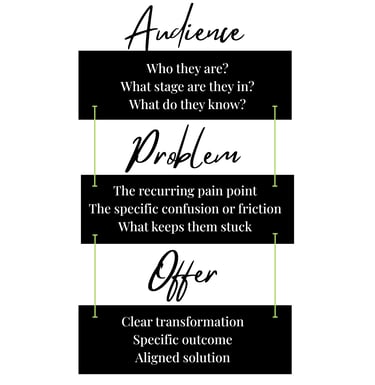
Use this framework to create clear positioning for any digital product:
Step 1: Identify Your Ideal Customer's Current State Where are they right now? What's frustrating them? What have they already tried?
Example: "Overwhelmed by content creation, posting inconsistently, feeling like they're shouting into the void"
Step 2: Define the Desired Outcome Where do they want to be? What does success look like?
Example: "Posting consistently with a simple content system that takes 2 hours per week and actually attracts buyers"
Step 3: Name the Gap (The Positioning Angle) What's missing between where they are and where they want to be? This is your positioning hook.
Example: "A batching system designed for digital product creators, not social media influencers"
Step 4: Write Your Positioning Statement Combine the elements: "I help [specific audience] go from [current state] to [desired outcome] through [unique approach]."
Example: "I help new digital product creators go from scattered, inconsistent content to a simple 2-hour weekly batching system that attracts buyers—without social media burnout."
Step 5: Test Your Positioning Share your positioning statement with 5-10 people in your target audience. If they immediately say "that's me" or "I need this," your positioning is strong.
How to Position Your Digital Product (Step-by-Step Framework)
Promotion amplifies whatever positioning already exists. If your positioning is vague, promotion magnifies confusion. If your positioning is clear, promotion accelerates trust.
HubSpot's content marketing research shows that clarity of message directly impacts conversion more than frequency of promotion. This is why early-stage creators benefit from refining positioning before increasing visibility.
The positioning-first approach:
Define your positioning (who it's for, what problem it solves, why it's different)
Test your messaging (share it, get feedback, refine)
Create the product (build based on validated positioning)
Promote with confidence (your messaging is already proven)
When you skip positioning and jump straight to promotion, you waste time and money amplifying unclear messages. When you position first, every piece of content and promotion reinforces the same clear message.
This orientation phase mirrors the early momentum work discussed in How to Create Your First Digital Product in 60 Minutes. —clarity before execution prevents months of wasted effort.
Common Digital Product Positioning Mistakes
Avoid these mistakes that weaken your positioning:
Trying to appeal to everyone - "For anyone who wants success" is not positioning; it's avoiding decisions
Leading with features instead of transformation - Buyers care about outcomes, not how many modules you included
Copying competitor positioning - If you sound identical to others, price becomes the only differentiator
Using jargon or buzzwords - "Synergistic productivity optimization" means nothing to real buyers
Positioning around yourself instead of the buyer - "I'm passionate about..." doesn't matter if it's not solving their problem
Skipping audience research - Guessing what your audience needs leads to positioning that misses the mark
Strong positioning requires making choices about who you serve and who you don't. Trying to be for everyone makes you forgettable to everyone.
Why You Must Position Before You Promote
Frequently Asked Questions About Digital Product Positioning
What's the difference between positioning and marketing?
Positioning is the strategic foundation—who your product is for and why it matters. Marketing is the tactical execution—how you communicate that positioning through content, ads, and promotion.
Can I change my product positioning later?
Yes, but it's definitely messy. Changing positioning means rewriting all your messaging, potentially confusing existing customers, and starting over with brand awareness. Get it as right as possible before launching.
How do I know if my positioning is working?
Strong positioning shows up in three ways: (1) Your ideal customers immediately say "this is for me," (2) Price objections decrease, (3) Word-of-mouth referrals increase because people know how to describe your product.
Should I niche down or appeal to a broader audience?
Start narrow. It's easier to expand later than to build momentum with vague positioning. A product "for everyone" is actually for no one.
Do I need to position differently for different platforms?
Your core positioning stays the same, but you might emphasize different angles depending on platform context. The who/what/why remains consistent.
What if my competitors have similar positioning?
Find a different angle—serve a more specific sub-niche, focus on a unique transformation, or differentiate on approach (fast vs thorough, beginner-friendly vs advanced, etc.).
Your Next Steps to Position Your Digital Product
Clear positioning is the foundation of every successful digital product. Here's how to get started:
Today: Write down who your product is for, what problem it solves, and what makes it different
This Week: Test your positioning statement with 5-10 people in your target audience
This Month: Refine your messaging based on feedback and build your product around validated positioning
Before investing in design, promotion, or scaling, get your positioning right. For creators still clarifying direction and intent, the Boss Up Blueprint supports this stage by helping ideas take shape before execution begins.
In 2026, positioning creates demand long before selling begins. When a digital product is clearly positioned, it doesn't need urgency tactics to convert—it attracts aligned buyers naturally.
Ready to clarify your positioning and launch with confidence?
The Boss Up Blueprint provides structured guidance to help you define your product positioning, validate your idea, and create offers that sell without pressure. Start with clarity, build with intention, and launch with momentum.
© 2025 Miss Manifest It All.
All rights reserved.
A brand owned and operated by ByNamaSasha LLC.
Let’s Connect
Stay in the Know
Be the first to get clarity drops, launch tips, and digital money moves.